Monday, August 10, 2015

Business & Baseball: A Conversation with Jack Welch and John Henry, Moderated by Brian McGrory


I had the distinct privilege of attending this talk, really a conversation with Jack Welch (former CEO of GE) and John Henry (owner of Red Sox, NESN, Liverpool soccer club, and The Boston Globe), moderated by Brian McGrory (Editor of The Boston Globe), held Wednesday night, April 22, 2015, at the Seaport Hotel, in front of a crowd of nearly 500, plus the NESN camera crew. An abridged, edited one-hour version has aired on NESN, and so I am here to fill you in on what you missed, and then pick up where the talk left off. I’m sure the show will air again one of these days during a rain delay.
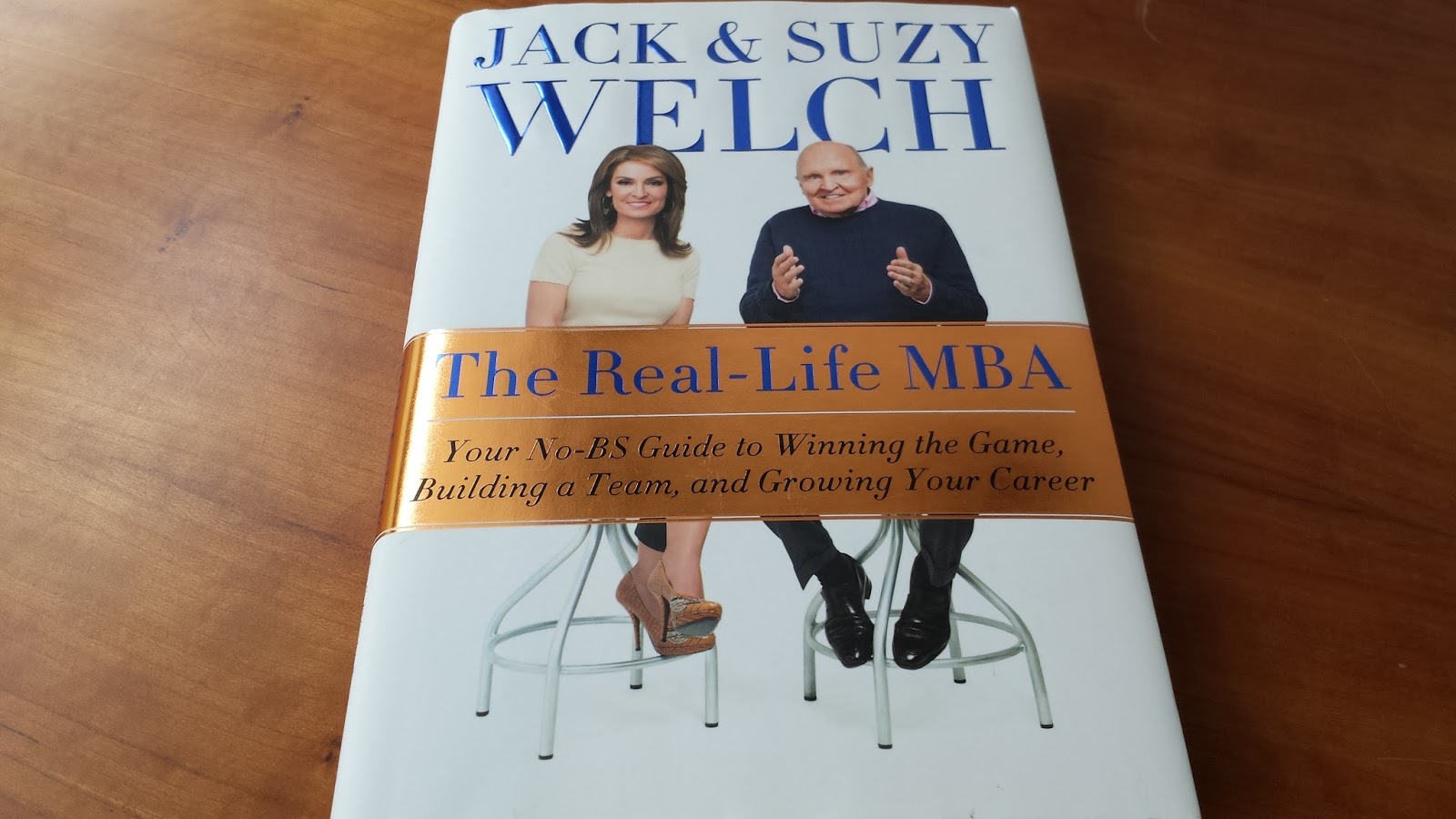


Jack Welch quickly steals the show with the first few questions about his latest book, titled The Real-Life MBA, written with wife and co-author, Suzy Welch. He repeatedly pushes the key  principles of alignment and engagement in business, and their mantra: tell people where you’re going, why you’re going there, how you’re going to get there, how they fit in, and what’s in it for them.

Jack is a virtual firecracker: hot, fun, loud, and probably more than a little dangerous. He has a sparkle and a glow. And he’s on a roll, as you realize that this is just one stop along his book tour, taking every chance to also promote his online MBA program, his view of business, the economy, and the world.

The room is filled with adoration and admiration for both men. They are clearly as different as night and day. Jack is homegrown, originally from Salem, with a heavy Boston accent. While a chemical engineer by education, he is the textbook charismatic leader. He’s excited – and has an opinion – about everything. I can see why people would follow him. John is a Midwesterner, originally from Quincy, Illinois. That’s Quincy, pronounced properly, “Kwint-see,” which is located along the Mississippi River just a bit downstream of the Quad Cities (please refer to my prior blog post, “Poutine,” published June 12, 2015). John arrived in Boston by way of California, studied philosophy, and followed a more varied career path (if I trust Wikipedia anyway), playing in a couple of bands, and trading commodities. In some ways, I can relate to both of them. My first major (not my last) was chemical engineering, and I think of myself as an amateur philosopher.   

When Brian turns the first question over to John Henry, asking him why he purchased The Boston Globe, John responds: “I must not have had enough challenges.” A very Midwestern reply. “Ha, ha, this is very funny,” I think in my head, but it falls flat and is greeted by only an awkward silence from the audience. My heart is breaking for him. He tries to recover: “Not very funny, I guess.”  

I can’t count the number of times my Dad has said, “Life is about challenges, Rosie,” followed by his tales of how he dug and poured the foundation himself for his first bakery in Plainfield, Illinois, or bought a gutted-out house and re-built it.  We’re not good at sitting around; we always have to have a project that we’re working on.

In a few words, John explains that he wants to be involved in the next phase of journalism, citing its importance to the community. Of course, longer and more eloquent versions of this answer have been published in the Boston Sunday Globe in a full-page editorial piece in October 2013, and in the interview by Jason Schwartz in Boston Magazine in March 2014. Then Brian asks Jack what his advice would be, given the titanic changes shaking the industry, with digital competition and changing readership. Jack agrees that it’s a changing world, where it’s “analog dollars to digital pennies” and it’s “fabulous if you can move faster than the next.” This is not helpful, I think to myself, but only further highlights the uphill battle newspapers face, as they deliver content both digitally and via the driveway. They have a foot in both the analog and digital worlds.  

This reminds me of a conversation with my Dad last summer on the topic of newspapers, and I mentioned that John Henry, owner of the Red Sox, had recently purchased the Boston Globe. “Geez, my God, Rosie, why in the hell would anyone want to do that?” he asked. He went on to complain about the decline in the local newspapers, though he still gets the Chicago Tribune.

Later on in the talk, Brian asks Jack about his 2006 bid to purchase the Globe, and you get a sense that, while Jack had wanted to make the purchase at the time, he might not be regretting that things didn’t work out so much now.

What is the future of newspapers? The only sure thing is that it will be different. Yet, the free press plays such a vital role in providing local insight and analysis of news, in fact sometimes defining what is actually considered news, and shaping a community’s experience of the news . There are just so many new choices. Just as “video killed the radio star,” the internet and the myriad of social media are all challenging conventional news delivery. If Paul Revere could have tweeted it out that the British were coming, instead of going on his midnight ride, he probably would have, wouldn’t he? The first I heard about Ferguson (one year ago) was from a tweet by Tyler Glenn, lead singer of the Neon Trees, and not from any mainstream television or print media. Yet, I also fondly recall feeding the quarters into the news stand to get my copy of the Sunday Chicago Tribune, to read about the world, plus the column of that smart, smart Boston woman, Ellen Goodman.  I wax nostalgic.

But I’ve digressed – back to the talk.

What’s clear is that we are in polite company. There will be some good-natured ribbing, but after all, Brian is interviewing his boss, and Jack and John are essentially houseguests in the Globe’s living room, and no punches are going to be thrown. That’s okay, there is still plenty to be learned from the conversation. The closest we get to a controversial question is whether John knew that Jon Lester had the yips throwing to first base. Answer: No. Of course, what I really wanted to ask at that point is whether there was really fried chicken in the club house in 2011, but I exercise surprisingly great restraint.

Brian calls The Real-Life MBA a “deeply wise book,” and quotes what Jack calls “truth-and-trust” leadership, “relentlessly truth-seeking and trust-building,” a culture where “everybody knows where they stand.” If you have this, Jack says “you’ve got a company that hums! You’ve got the game by the tail!” The problem is that most businesses don’t have this level of transparency. “In baseball, you have transparency.  Every player’s batting averages are in the paper. In business, you don’t have that. People don’t talk candidly.”

Brian jokes, “I’m about to ask John where I stand,” and gets some laughter from the crowd. He’s funny.

Jack goes on to say that people should be told where they stand once a quarter. “That’s not cruel. That’s kind management.” He cites the results of a Gallup study that found 65% of employees are not engaged. “Imagine, in football or baseball, what if 65% of the players stayed in the dugout!” People should know where the business is going, and what’s in it for them, and be given a sense of purpose. This lack of engagement – “this is a tragedy, it’s not fun or enjoyable, and it’s not winning, in baseball or business.”

It’s like having fried chicken in the clubhouse, I think.

Brian reads a quote from the book about leadership. Jack responds: “If you’re the smartest guy in the room, as a leader, you’ve got a problem. Everyone knows something you don’t know. You’ve got to get every mind in the game.” Earlier, when asked about what makes Boston unique, Jack recalled how much he enjoyed the Boston business world, always “a bunch of Italians and Irish screaming at each other, and it’s fun.” (To those of a more Midwestern persuasion, this might sound more like holidays at the in-laws.)

“Companies have to be aligned,” Jack says. When he was at GE, with 400,000 workers, “every single person” knew where the company was going, why, and what was in it for them. “Business truly is like baseball, it’s just not as transparent,” he hollers.

Brian asks them both how important luck has been for them, relative to skill and hard work. John Henry recalls being told by Bill James (a baseball numbers guy), that 80% of the results in any game is due to luck. But, John Henry counters, that it’s the 20% skill, and more so determination, spread across the course of 112 games that makes the difference in a season. Especially determination – that belief, saying “I will not be denied.” 

I’d never realized it, but the reason why baseball teams play a series of three or four games, is because chance and luck play such a huge part in the game, and so winning one game doesn’t really prove much, but winning two out of three or three out of four does. It was my cookie-craving rabbit-finding friend from the first post who filled me in on this, years ago.

Jack agrees, that luck has been huge for him as well in his career. And, I would heartily agree.

It’s funny, when talking to young job candidates, and they’re asked which is most important – luck, skill, hard work, or determination – they typically answer hard work and determination. They just can’t see all the chance events that led to where they are today. From where they sit, all they’ve seen is that persistence leads to results, just as a lab rat gets through a maze, learns to hit a button and get a reward of kibbles. Hard work results in a reward. Of course, this speaks to the heart of Dr. Martin Seligman’s study of how our sense of control shapes our viewpoint. People who see good things as happening because of what they did, and attribute bad things to just bad luck or timing (and no personal causal culpability) are generally more optimistic – and happier.

I recall thinking this same way myself, when I was younger, that I didn’t get to where I was by lying about on the couch all day eating bon-bons. But, I have also always known that I’ve been lucky in a thousand different ways. Hard work and luck both play a part. It helps to work hard. To cite a quote from Dr. Louis Pasteur: “Fortune favors the prepared mind.” (I also found this in my fortune cookie once, too.)

I have to laugh, though, thinking of how many a manager has probably thought the same thing, that it was all purely their skill and strategy that led to hiring the best qualified candidate – but that was probably luck, too! Many a manager has probably sprained a shoulder patting themselves on the back for making a great hire, when it was all luck of the draw, and/or the hand of fate.  

Jack then speaks to the younger attendees in the audience, describing how their managers might be bringing them around the office, by the scruff of their neck, showing off their new hire to everybody. “Hey, look at me, I just got me an engineer from MIT!” I love the imagery, the mother cat carrying its kitten. And it’s so true. Hiring is a joyous event, a cause for celebration. Fun. He also has plenty to say about the other side of things, when someone has to be let go, and gives his perspective on “getting whacked.” Later in the Q & A period, when an audience member asks about dealing with the bottom 10 percent, he grouses a little bit. “I’ve never been asked about how to deal with the top 20 percent.”

Brian’s next question is about pay disparities, and is it okay for CEOs to make huge sums of money, many times what the average employee is making. Jack’s answer: “Yes, if the shareholders are making it, and the employees are flourishing, then they’re winning the game, too. You’re interested in everyone getting their piece of the pie.

John Henry remarks that “maybe it’s not a problem of income inequalities so much as it’s about opportunity inequalities, from the time that a child starts pre-K, and in fact a lot of children probably can’t afford pre-K; though not a problem for us to solve…” His voice trails off, but you can tell that it tugs at him.

Jack’s answer is “more jobs, GDP, and education reform,” criticizing the traditional education system (expensive, tenured), and promoting the pluses of his online MBA program (improved quality, delivery system, and price).

It’s clear that business is not going to fix society’s ills. Not their problem to solve. Let business thrive and provide jobs. That’s what business can do. Highly ironic, I think, given the preceding discussion of luck vs. hard work and determination. Are some opportunities afforded only to the lucky ones? Luck alone will never open some doors.

The first question from the audience asks about how Jack came to be called “Neutron Jack” back in the 1980s. He was in the midst of streamlining, merging and selling businesses, removing layers, cutting staff, and outsourcing. “Not a moniker you want; wish it never happened, but we were ahead of the game.” Other companies eventually followed suit.

After listening to Jack for a while, you can start to see the world through his lens, where everything can be sorted into two bins, either good for business or bad for business. There are simply things that will help it thrive, and those that will threaten its prosperity. When you look through this lens, things start to make sense. GE may have brought good things to life, but it also brought PCBs, too. Environmental compliance is a necessary cost, but still a cost that goes against the bottom line. Later, a woman in the audience asks about STEM outreach. No, it’s not an area he has gotten into. After the talk, I hear another attendee ask him about sustainability, and the answer is the same. These things – STEM, sustainability, and the environment – are tangential, and not on the line forming the shortest path between investment and return.

The second question from the audience is from a fellow who works in manufacturing. “How do you push alignment down to the shop floor?” he asks. Jack tells him that it’s all about going out and talking to groups of employees. “No leader should be hiding in their office; they should be out telling the story,” noting all the social media tools now available. (Jack Welch has about 1.4 million Twitter followers at last check.)  Jack elaborates on this a bit, and at some point John Henry remarks that he doesn’t necessarily agree with everything that Jack is saying, “but I’m not going to argue business with Jack Welch.”

Now, this I find fascinating, because it is precisely the sort of disagreement in approach, method, style, tactics, and philosophy in leadership that is worth exploring. Jack’s advice perhaps works best for Jack and others like him. But, all leaders are not Jack-Welch types. It just matters that a leader be authentic and true-to-themselves in their leadership style. What I found so fascinating in this exchange is that, even though Jack has preached so hard about “getting all the minds in the room,” he has just shut John down, or at least made the prospect of crossing swords with him seem too daunting a task. The challenge to getting participation and input from everyone is creating a space that is conducive to the free exchange of ideas.

In that one single moment, there was such a lost opportunity to examine these different styles.

Now, given that I’d obtained entrance to this event via a press pass (number two, for anyone who is counting), I had prepared some questions in advance, and there was a natural connection between this exchange and one of my questions. So, heart pounding, I raised my hand. If you happened to watch the show, or catch it on an inevitable replay during some future rain delay, that’s me asking the last question.  I wanted to try to use the exchange that just happened as a springboard for a broader question about fostering a culture of inclusivity. What came out was a bit less eloquent than I’d hoped, but here’s the gist of what I meant to say:

You’re both very successful leaders, but also very clearly have different styles. Given that studies show that increased diversity on teams leads to increased creativity and productivity, and yet studies also show that people are most comfortable working with those who are most similar to themselves. Given that, how do you encourage diversity within your organization?

Jack gave his standard answer: “Get everyone in the room together, have a food fight up front, get input from many different minds, then decide on a course, and get everyone on board. You want to get every brain in the game.”

John answers that he “knows that the decisions he makes every morning have far-reaching effects on many people. He’s always thinking about who will be affected and how.”

Yet, both missed a golden opportunity to speak to the elusive goal of figuring out how to reap the benefits of diversity, by fostering a culture that gets past the discomfort of working with people from different backgrounds. The answers weren’t wrong, they just could have been so much more.

To be continued…
 

Post Script
After a few more grand detours – work, travel, and a tiny bout of food poisoning thanks to an errant roast beef sandwich – I finally wrote up my account of the “Business & Baseball” talk. Ironically, shortly after this episode, the Wall Street Journal tweeted “About 48 million Americans, or 1 in 6, get sick each year from food,” which I re-tweeted: “Make that 48 million and two.” There’s nothing like lying on the couch Googling various types of foodborne illnesses and trying to guess which one you have. For a while, I thought I would never eat anything else but saltines and ginger ale ever again, but have since managed to bounce back.  

While I’ve been out, I’ve also been catching up on my reading, and managed to finish Jack and Suzy Welch’s book, The Real-Life MBA, as well as Pete Rose’s book, My Prison Without Bars, and Jenny Nordberg’s book, The Underground Girls of Kabul. The added benefit of having attended the talk is that I can now hear Jack’s voice hollering off the pages. Seriously, every sentence would have an exclamation point at the end of it, if he had his way. I only regret that I can’t quite tell which parts should be in Suzy’s voice. I loved his description of their writing process, sitting and debating a topic over a few drinks at the bah (“bar” for non-Bostonians), and then Suzy going back to her “cave” to write. This is a whole new take on Virginia Woolf’s room – or cave – of her own.  “She can write like hell!” Jack hollers. They are clearly a dynamic duo.

For the studies mentioned in my question, please refer back to post #12, published Jan 27, 2015, titled “Challenge Yourself!”

Thank you to John Henry for the photo opportunity after the talk. I missed Brian McGrory and Jack Welch, unfortunately. Thanks also to The Boston Globe for the press pass.


In other news:

Thirteen out of fifteen of my Dad’s asparagus plants have sprouted.

The Diane Sawyer interview with Bruce Jenner aired on April 24, 2015 on ABC.
Caitlyn Jenner was introduced to the world on the July cover of Vanity Fair magazine June 1st.

And on June 26th, SCOTUS delivered the ruling recognizing same-sex marriage from sea to shining sea.

Congrats to the Seattle Saracens on their first place finish in the Division I Women’s Rugby Club National Championships, and to Beantown for a very competitive, hard-fought finals match on June 13th, 2015. Well played.

And, congrats to the US Women’s Soccer team for their World Cup victory!

 
Coming Next
Part 2: The Diversity Challenge. The conversation continues after the talk.  

 
Advance Notices:

Art Exhibit: Out of the Earth
Artist: Joe Caruso
Sep. 2 - 27, 2015
Receptions: Sep. 4, 11, 27
Gallery: Galatea Fine Art, 460B Harrison Ave., Boston, MA

http://galateafineart.com/

HUBweek
Oct. 3 - 10, 2015
Boston, MA
Check out the events posted so far, advance registration is available. Some are free and some require paid tickets. It’s an opportunity to get together with some of the great minds of Boston, use various locations across the city to gather in these various living rooms. The week-long event is described as “where art, science and technology collide” – or is it more of an intersection? Meeting? Merging? What is the relationship between art, science and technology? 

http://www.hubweek.org/

Women In STEM Summit
Oct. 22, 2015
Bentley University, Waltham, MA.

http://www.iirusa.com/stem/home.xml


Boston Book Festival
Oct. 23 - 24, 2015
Copley Square, Boston, MA

http://www.bostonbookfest.org/
 
References

Henry, John W., 2015.  Why I bought the Globe. The Boston Sunday Globe. October 27, 2013.
https://www.bostonglobe.com/opinion/2013/10/27/why-bought-globe/QmFHhvRGFajQh1oMcAJ64M/story.html

Landro, Laura, 2015. Foodborne Illness Risk Lives On. The Wall Street Journal. July 6, 2015.

http://www.wsj.com/articles/foodborne-illness-risk-lives-on-1436202544

Nordberg, Jenny. 2014. The Underground Girls of Kabul: In Search of a Hidden Resistance in Afghanistan. New York: Crown Publishers.

Rose, Pete, with Rick Hill. 2004. Pete Rose: My Prison Without Bars. USA: Rodale.

Schwartz, Jason, 2015. Will John Henry Save the Globe? Boston Magazine. March, 2014.
http://www.bostonmagazine.com/news/article/2014/02/18/john-henry-boston-globe/

Seligman, Martin E. P. 1990. Learned Optimism. New York: Vintage Books, a Division of Random House.

Welch, Jack, and Suzy Welch. 2015. The Real-Life MBA: Your No-BS Guide to Winning the Game, Building a Team, and Growing Your Career. New York: HarperCollins Publishers.

© 2015 Rosemary A. Schmidt
Rose Schmidt is the author of “Go Forward, Support! The Rugby of Life.” Use of individual quotes with proper citation and attribution, within the limits of fair use, is permitted. If you would like to request permission to use or reprint any of the content on the site, please contact me.

Friday, June 12, 2015

Poutine


Poutine roughly translated from the French-Canadian means “mess,” and that’s just what you get when you allow too much time – and too many topics to build up – between blog posts. My apologies for the long silence. I went on a little travel, and am just catching up now. So, consider yourself forewarned, this post is a bit of a mess.

Poutine is also a French-Canadian delicacy consisting of fried potatoes, brown gravy, and cheese curds. I got the chance to try this tasty treat while visiting the Quad Cities, nestled along the banks of the Mississippi River where it forms the Iowa-Illinois state line. As we remarked to the waiter, “This will be the best poutine we’ve ever had. Because it’s also the only poutine we’ve ever had!” All but my youngest grandniece tried it. She thought it smelled like dog food. Next we went for an ice cream treat at Whitey’s, and as we were getting back into the car where the leftover container of poutine had been left sitting, we all let out a collective groan: “The car smells like poutine!”. No one is going to be coming out with a poutine-scented air freshener or Yankee Candle anytime soon.

I would apologize for the digression, but this entire post is a digression, maybe even a grand detour, before getting back to the Business & Baseball post.

In my travels, I actually made it to all four of the Quad Cities, hitting the Wal-Mart in Bettendorf, Iowa; the Front Street Brewery in Davenport, Iowa, where we had the poutine; Huckleberry’s Pizza in Rock Island, and finally the Olde Towne Bakery in Moline, Illinois, where I found the best cream horns ever. This makes up just a little for the time I spent a couple of years ago in my fruitless search for bismarks in Bismarck, North Dakota. And, no one even got it, when I asked for a bismarck. That should have been funny. Bah! I could not find a bismarck in Bismarck. They’re missing out on a major tourist attraction there. What a missed opportunity. The cream horns alone were worth the trip to Moline, though.


While we were there, we also visited the John Deere Pavilion and had a blast crawling all over and getting inside the various farm implements they had on display, and purchasing the obligatory souvenirs and T-shirts. We never knew how enamored we were with John Deere and his story of farm implement innovation, making perhaps the first self-scouring steel plow in 1837. And there is a New England connection. He originally came from Rutland, Vermont. Talk about optimism, persistence, determination, and fearlessness. He had borrowed money to build his blacksmith shop there in Vermont. It burned down, and so he borrowed some more money and re-built his shop. It burned down again. Figuring that it was unlikely that his lender was going to say, “Hey, third time’s the charm,” he set off for Grand Detour, Illinois, with $73 in his pocket, and went about making a living there, earning enough to pay off his debts in Vermont and pay for his family to travel out and join him, and the rest is history.

Grand Detour. What an apt name for a town. It’s actually named for an unusual twist and turn that the Rock River takes, where it flows to the north briefly, a brief aberration before returning to the southwestwardly flow typical of the streams in this area as they make their way toward the mighty Mississippi. Suffice it to say, that sometimes our lives (and blogs) take just such detours.

And history is never without controversy. When you go back and talk to folks around Chicago, there is also the story of John Lane who also created a steel plow from an old sawmill blade at his blacksmith shop in Lockport, Illinois, in 1834 (Stanley, 1994). He also came from out east, where wood plows worked okay in the sandier soils, but the rich soils of the Midwest would tend to stick to the plow and gum things up. John Lane was selling his plows, called “Lockport Clippers” and “Sod Breakers,” in the Chicago area by the 1850s.

Later on, when I give my Dad his John Deere T-shirt that I brought back for him, he remarks, “Well, to be honest, I personally liked the McCormick tractors. Now, don’t get me wrong, they were both powerful tractors, but the McCormick ran better.” There is a long, complicated history of farm implement manufacturers, such as Deering, McCormick, and others working in direct competition with each other, then getting bought by J.P. Morgan and merged in 1902 to form International Harvester, and then getting split and sold off again much later in parts and pieces.  It’s a cautionary tale for any business. The International Harvester Scout was a great car, a ton of fun, and the original SUV. But a flawed business model and a woeful 12 mpg simply made it unsustainable. Every once in a while I try to revive my one-person campaign to Bring Back The Scout. I am not terribly hopeful or optimistic.

While I’ve been out, I’ve also been catching up on my reading. I wanted to finish Jack and Suzy Welch’s book, The Real-Life MBA, but I was also in the middle of reading Pete Rose: My Prison Without Bars, and so I needed to finish both.

In the meantime, so many stories broke, so much news was made.

The Diane Sawyer interview with Bruce Jenner aired on April 24, 2015 on ABC.

Caitlyn Jenner was introduced to the world on the July cover of Vanity Fair magazine June 1st.

The New England Patriots #DeflateGate penalties were announced. Memorial Day was observed, reminding us not to confuse those things that we treat like life-or-death with things that really are. Robert Kraft made the right decision. Move on.

The Boston Red Sox drafted Clate Schmidt June 11th (no relation). Welcome to town, and wishing you all the best with your treatment.   

Ireland voted on a referendum Friday May 22nd, approving same-sex marriage. “A kiss for luck and we’re on our way…” Ukraine held its Gay Pride parade, KyivPride2015, along the Dnipro River June 6th. Boston’s Gay Pride parade will be held Saturday, June 13th. And, the new season of Orange Is The New Black starts Friday June 12th.

 
Beantown Women’s Rugby Football Club will be playing the Seattle Saracens in the Division I Club National Championships Saturday evening, June 13th, at Infinity Park, in Glendale, Colorado. Good luck, Town! There is still time to donate to help fund the team’s travel costs.

http://www.youcaring.com/sports-fundraiser/send-beantown-to-nationals/355542
 

 Go Forward, Support!

Go Town!
 

Coming Next
I will give my take on the talk, “Business & Baseball,” held Wednesday night, April 22, 2015, at the Seaport Hotel, an interview with two local Boston business icons, Jack Welch (former CEO of GE) and John Henry (owner of The Boston Globe, Boston Red Sox, and the Liverpool Football Club, and by “football” I mean soccer), moderated by Globe Editor, Brian McGrory.
 

References
Stanley, Charles, 1994. Plow Inventor’s Role Still Buried in History. The Chicago Tribune. May 27, 1994.


© 2015 Rosemary A. Schmidt

Rose Schmidt is the author of “Go Forward, Support! The Rugby of Life.” Use of individual quotes with proper citation and attribution, within the limits of fair use, is permitted. If you would like to request permission to use or reprint any of the content on the site, please contact me.

Saturday, May 2, 2015

Fearless - Post Script


Fearless by Carol Aust (acrylic on wood)
The natural follow-on to the last post is actually my very first post, originally published on September 16, 2014 (scroll all the way down to find it), “A Dangerous Question,” which asks: 
“What would you do if you had no fear?”

Steal some cookies?
Start a blog
Start anew
Ask for a press pass
Or two…


Which is the perfect lead-in to the next post to be published later this month.  


I will give my take on the talk, “Business & Baseball,” held Wednesday night, April 22, 2015, at the Seaport Hotel, essentially an interview with two local Boston business icons, Jack Welch (former CEO of GE) and John Henry (owner of The Boston Globe, Boston Red Sox, and the Liverpool Football Club, and by “football” I mean soccer), moderated by Globe Editor, Brian McGrory. NESN has aired an edited version of the talk, and yes, that was my question at the very end, for anyone who happened to catch it. More to come.

And then back to the rugby vs. football thing, and maybe another one of my Dad’s letters.

© 2015 Rosemary A. Schmidt
Rose Schmidt is the author of “Go Forward, Support! The Rugby of Life.” Use of individual quotes with proper citation and attribution, within the limits of fair use, is permitted. If you would like to request permission to use or reprint any of the content on the site, please contact me.

Sunday, April 26, 2015

Fearless

Fearless, Carol Aust (acrylic on wood)
After our Seder, recalling the events leading up to the Israelites being led by God out of Egypt, we were lounging around on the couch and started wondering more about what happened next. Why did the Israelites wander around in the desert for 40 years? Of course, Susan uses this as an excuse not to go camping. “Jews don’t camp!” she says. “We wandered the desert for 40 years, why would I want to go camping now?” Plus, I am unable to sufficiently dispel her concerns about all the hazards of camping, both large (bears) and small (ticks), and so we pretty much don’t camp.  
Back to the Israelites. Why did they wander the desert 40 years? Were they lost? Certainly they didn’t have GPS then, but – really? Forty years? Even I am not that bad, and as we all know, my proficiency in getting lost is epic. (See blog post #4, Getting Lost & Getting Found, published October 20, 2014). Were they just lost? Perhaps not physically, but spiritually. 
Our curiosity piqued, we went in search of the answer. Google, of course. What happened after the Israelites left Egypt, where the Passover story ends? God was taking them to a land of milk and honey. Minor detail that He finally shared with them, of course only after they had already left Egypt, is that this land was already occupied by the Midianites, a bunch of big, strong, fierce giants (not a bit unlike the Seattle Seahawks), and they would have to be removed first. But, God said, hey, trust me, I’m on your side. 
What stopped the Israelites? Fear. The thing that holds us all back from our promised lands. They still couldn’t believe, even after having witnessed miracle after miracle, the plagues and the parting of the Red Sea. They just couldn’t quite see the possibility of yet another miracle. Escaping Egypt was not enough. God apparently doesn’t like to be doubted, and so that’s why he made them wait forty years, at least according to Google.  
This raises the question: Which was worse? Being prisoners enslaved to the Egyptians? Or, being held prisoner of their own fears? As always, it is a fundamental question of confidence, faith, and trust – in oneself, others, and God. To borrow a quote from The Unbreakable Kimmy Schmidt  (who could be a long-lost, albeit fictional, cousin of mine), “Escaping is not the same as making it.”
Driving home from work Friday night, I saw a car on Route 2 with the bumper sticker: “I live in fear.” I couldn’t believe it. I felt so sorry for that driver. Of course, as I was drawing closer, to try get a better view, and make sure it really said what I thought it did, I probably just further added to their fears. What did they mean by that?  

As it has been said, many times and many ways, courage is not the absence of fear, but going forward even when one is afraid, acting “fearlessly” – courageously – in the face of our fears. 
 

“I learned that courage is not the absence of fear, but the triumph over it. The brave man is not he who does not feel afraid, but he who conquers that fear."
                                                                                                                      Nelson Mandela
 
"Courage is being afraid, but going on anyhow."
                                                                                                                      Dan Rather
 

About
This was just a natural follow-on to the prior blog post about miracles and believing. So excited to have picked up the painting, titled “Fearless,” by Carol Aust, from the Left Bank Gallery in Wellfleet. I saw the painting last September and found it so inspirational, I would have bought it on the spot, but I was afraid of adding another large ticket item to my credit card bill (I know, pretty ironic right?), and so I have been quietly, patiently paying for it on layaway over the long winter. Happy to see a good chunk of wall space devoted to Carol Aust’s work at the Left Bank Gallery for the 2015 season. 

http://www.carolaust.com/
 

Post Script
We continue to celebrate all the miracles of spring, with new life, leaves budding out on trees, and babies being born or on the way. Another miracle, we finally put our humidifiers away, so it no longer sounds like we’re living in an aquarium. And, my Dad is planting asparagus again this spring!

I’ve added a few more books to the pile on my nightstand:

-       Images of America: Tiffin, by Keith Elchert and Laura Weston-Elchert. Congrats to Keith and Laura on the publication of their book this year!

-       Mudhouse Sabbath and Wearing God, by Lauren Winner. I attended her talk Sunday April 12, 2015, at Trinity Church, and found her journey fascinating, from being born and raised Jewish, to converting to Christianity and recently being ordained an Episcopal priest.

-       The Real-Life MBA, by Jack and Suzy Welch.

 
Coming Next
I will give my take on the talk, “Business & Baseball,” held Wednesday night, April 22, 2015, at the Seaport Hotel, essentially an interview with two local Boston business icons, Jack Welch (former CEO of GE) and John Henry (owner of The Boston Globe, Boston Red Sox, and the Liverpool Football Club, and by “football” I mean soccer), moderated by Globe Editor, Brian McGrory. An edited version of the talk was aired on NESN Saturday, April 25, 2015, and yes, that was my question at the very end, for anyone who happened to catch it. More to come.

And then back to the rugby vs. football thing, and maybe another one of my Dad’s letters.


© 2015 Rosemary A. Schmidt
Rose Schmidt is the author of “Go Forward, Support! The Rugby of Life.” Use of individual quotes with proper citation and attribution, within the limits of fair use, is permitted. If you would like to request permission to use or reprint any of the content on the site, please contact me.

Sunday, April 5, 2015

Asparagus and Other Everyday Miracles


I still hold a grudge against asparagus. It’s a childhood thing. Let me explain. One day, my Dad comes inside the house all excited and says, “Hey, Rosie, do you want to come see an octopus?” And I say, “Sure!” So, I follow my Dad outside, and we make our way to the garden, where I am expecting to see some large, gray, squishy, tentacled marine animal. Instead, my Dad holds up a gangly plant, with soil clods hanging from it. I was still waiting for my octopus. “Here it is, Rosie, I got some asparagus plantings. See all the stalks of asparagus? Just like an octopus!”

 
Thus, at an early age, I was introduced to the difference between simile and metaphor, between what is, and what is “just like.” What a letdown. I got excited to see something that was an actual octopus, not some plant that might in some ways resemble an octopus. Welcome to life.

This reminds me of another more recent experience in our condo community. One of our neighbors from across the way, an older woman, originally from Italy, started telling us about some broken steps on the stairs to her back deck. I can hear my partner, Susan, in the background saying there was another unit that had some broken steps, and so the property management company had called our contractor, Steve, to come out and take a look at them. (Susan has been on the condo board for years now, an utterly thankless position, but that’s a whole other story.) In any event, I follow our neighbor over to her house, and through her unit, to the other side to see her back deck. She opens the door, looks out, and lo and behold, the broken steps have been completely replaced and repaired, good as new. Our neighbor exclaims, “It’s a miracle! Thank you Jesus!” I say, “Well, I think it was actually Steve…” But she would hear none of that. My explanation landed on deaf ears. It was a miracle, period, end of story, thank you to Jesus, not Steve or the condo board. He must have picked up some carpentry skills along the way from his stepdad, Joseph. I smile, and think – what a great way to go through life, experiencing miracles in ordinary everyday things. Slightly delusional, perhaps, yes, but reality has always been over-rated in my book, anyway.
How much happier could we all be, to be so child-like, in awe, wide-eyed, seeing miracles where others see carpentry; octopus in asparagus. Choosing the power of metaphor over the pale comparisons of simile. And what if we think about the big miracles – the parting of the sea, manna in the desert, water to wine, people rising from the dead, the Red Sox 2013 season. There are things that have happened in our lifetimes, in recent history, and we don’t know for sure what really happened. Were there weapons of mass destruction in Iraq? Was there fried chicken in the club house? We may never know. The big miracles happened thousands of years ago. How are we to know what really happened today? There are many mysteries.
When my Mom died, and we met with her parish priest to plan her funeral mass, and he asked which readings we’d like, I blurted out: the story of Lazarus. I hadn’t thought of it in years, but simply recalled that Jesus wept at the death of his friend and brought him back to life. Now, note, I called it “the story” of Lazarus. We don’t really know – maybe Lazarus wasn’t really dead, but just in a coma, and Jesus woke him up. Even the Catholic scholars and theologians debate whether or not Jesus really physically came back to life, or if he re-appeared to his followers in some way as if he had risen from the dead, in a more spiritual form. Sort of like the asparagus again; the difference between metaphor and simile, a physical or apparitional presence.  
This may sound like blasphemy, but there really is a continuum of belief. I recall running into a woman we know in town who lost her son two years ago, and we got to talking about whether the dead could communicate from the spirit world. She is very Catholic, and very much against the idea of psychics who claim they can communicate with the deceased. On the other hand, she heartily believes that butterflies are a sign from her son. She asked me if I believed in any of that. My reply: I don’t not believe.
At an early age, I briefly contemplated becoming a priest, but the prognosis looked pretty poor back then in the 1970s, and even worse when I came out a decade later, never mind the whole celibacy thing, plus my fuzzy pluralistic belief system. Now in a “multi-faith” marriage, we celebrate both the Catholic and Jewish holidays. We celebrate everything. In a conversation with a devout Christian several years ago, I was questioned about my faith. My answer: “I’m not being asked to believe in anything less.” I’m not sure I’d say I believe in everything. World created in seven days? That might be a little bit of poetic license. People rising form the dead? Communicating with spirits? Fate? Karma? Again: I don’t not believe. I believe in the possibility of everything. Did God lead Moses and the Israelites out of Egypt? Was Muhammad also a messenger from God? Did Jesus really rise from the dead? All, yes, surely, possibly. Maybe the world would be a better place if more of us could see the octopus in the asparagus, Jesus in their stair steps, and yes, even believe in another Red Sox World Series run in 2015. Play ball!

About
Happy Easter! Good Passover!

I wrote this almost a year ago, but thought the concept of everyday miracles would resonate with the dual holidays of Passover and Easter, so I saved it for now. A time when we need miracles more than ever. Can we imagine a world where people do not kill one another in the name of religion? My heart goes out to all who are grieving the lost and wounded in last week’s massacre at Garissa University College in Kenya.
 
Post Script
We enjoyed a lovely Passover dinner from Inna’s in Newton Friday night, everything wonderfully prepared. Especially the horseradish. Must have been made from a spring root, extra spicy! Which led to an observation that we could create a new saying to describe someone who is extra spicy or interesting, by saying they are like a spring horseradish!

http://blog.innaskitchen.com/p/home.html

And we will be trying out Royal, a new restaurant in Watertown, today for their Easter Brunch.
 
 
Women & STEM – Just after posting the last blog, observing that making changes in corporate America may be difficult as it’s happening too late, too far downstream, I found this article in The Wall Street Journal: “Men Enlist in Fight for Gender Equality,” by Joann S. Lublin, citing real statistically significant improvements in the number of female executives, after men became engaged in promoting gender equality, including putting the brakes on old-boy dynamics and educating staff on simple, fundamental differences in how men and women process information and make decisions (shocker: women think more before jumping in).  So, maybe there is hope.

Lastly, for an asparagus recipe, visit:
http://www.bostonglobe.com/lifestyle/food-dining/2015/03/31/recipe-for-roasted-asparagus-with-miso-butter/nIwykbcmdW1PCUJa9mJhIP/story.html

Coming Next
Part 2 – Our Pesach Haggadah (Passover Story)
And then back to the rugby vs. football thing, and maybe another one of my Dad’s letters.

References
Lublin, Joann S., 2015. Men Enlist in Fight for Gender Equality. The Wall Street Journal. March 11, 2015, p. B7.
http://www.wsj.com/articles/men-pitch-in-to-boost-women-at-work-1426029982
 
© 2015 Rosemary A. Schmidt
Rose Schmidt is the author of “Go Forward, Support! The Rugby of Life.” Use of individual quotes with proper citation and attribution, within the limits of fair use, is permitted. If you would like to request permission to use or reprint any of the content on the site, please contact me.

Sunday, March 15, 2015

Sorry About All The Snow

I have a public confession – and apology – to make. It was me who ordered up all this snow. It’s the perfect weather for writing, and since the last blog, we have had a total of four major snow storms, about a week apart, each bringing a foot or two of snow, adding up to a total of 105.7 inches in Boston, just about 2 inches shy of the all-time record of 107.6 inches set in the winter of 1995-1996. And, now – today – we did it! Boston has recorded about 3 inches of snow today, and this winter now officially stands as the snowiest winter on record for Boston!

People from other parts of the country ask, “Is it really as bad as it seems, on TV and in the news?” Well, yes and no. Driving home from work the other day, it occurred to me. We have all been going about, trying to live our normal day-to-day lives, yet when you look around, all you can see are these mountainous snow banks. It’s like living in the polar bear exhibit at the zoo. 

And, secretly, personally, and very quietly, I have been relishing it. Every single snowflake dancing down from the sky. Or flying sideways past out windows. There is just something about a snowy day, and a world cloaked in a blanket of heavenly snow that is just perfect for writing. It’s how I wrote my first book, the winter of 1993-1994, which had been the second snowiest winter on record, but has since been bumped to number three by this winter. I fondly recall retiring to my desk, cup of tea in hand, to write, pencil on paper.

When I met with the Publishing Guy, he was surprised when I said that I’d been filling notebooks, i.e., writing by hand, old-fashioned style, instead of just typing things up on the computer. He asked me, “What if you need to move a paragraph?” Answer: “I draw an arrow.” I just need to see it all in front of me, where I can flip back and forth, and see all the pages of text all at the same time. There is a physical presence to it. I can touch it, feel it, see it, the whole thing.  

As an aside, the only other writer he knew of who still wrote his works by hand was Malachy McCourt (A Monk Swimming). Interestingly, enough, Malachy is also known for playing Father Clarence in the soap opera All My Children (which I will also confess to having watched enough to know the characters and some of the story lines), and was also one of the founding members of the Manhattan Rugby Football Club in 1960. Small rugby world!

Of course, once I have everything written down, I’ll need to type it all up. I hate to tell everyone this, but the last time I typed up a book from handwritten text was – you guessed it – the winter of 1995-1996. Yes, the winter that previously held the record for the most snowfall. So, I might need another snowy winter to type things up. Or, maybe I can type in all kinds of weather.

Since the beginning of all this snow, here is a recap of what has been going on, aside from my quiet pencil scratching in my own personal snow globe.

Snowshoeing! In case you missed the tweets:


One would never know
There was all this snow
Underneath
My snowshoed feet!


As it turns out, I lost my left glove that very same day. But found it the next morning.

 
Ode to My Left Glove

My left glove
Left me
For the ground
Set free
But what is lost
Can be found
My left glove
Came back to me!

We found a pretty handy use for those snow banks piled high. Anyone aching from snow shoveling could have simply grabbed a spoonful of snow, filled an ice pack, and iced their pains away.


We made minestrone, lasagna, gnocchi, and chicken with our neighbor.

Congratulations to all the girls who competed in the Illinois High School Association Bowling Championship state championship tournament, and especially to the Waubonsie Valley Girls Bowling Team, for placing third at state. Woo-hoo! And, love the inspirational video by WTVT: https://www.youtube.com/watch?v=BQxU2fXPLYs

Equally amazing, the New England Patriots won the Super Bowl, just squeaking past the Seattle Seahawks in the final minutes of the game. I saw the play where Malcolm Butler intercepted the pass (I was on my knees, my nose inches from the screen), but I still couldn’t comprehend what had happened. Seattle had thrown a ball towards the end zone, someone caught it, but the Patriots seemed to be happy and celebrating. Mike Lynch, WCVB, said it first on the air – “Butler did it” – and it was just a tiny leap to turn that into “The Butler Did It!” Congrats to the entire 2014-2015 Patriots team, Coach Bill Belichick, and Robert Kraft.

CNN marked International Women’s Day by recognizing seven women who changed the world, and included Billie Jean King on the list.
http://www.cnn.com/2015/03/02/world/7-women-who-changed-the-world/


On the down side, there were the vile/criminal tweets about Curt Schilling’s daughter. Unbelievable. Unconscionable. And the trials of the Marathon bomber and Aaron Hernandez are in progress. No public apologies appear to be forthcoming there.

Lastly, a follow up to the previous post about women, STEM, and confidence. A recent Today article cites a study that showed the decline in girls’ interest in math and science can be traced to elementary school classes where teachers – unknowingly, unwittingly – displayed an unintentional bias in calling on boys more frequently than girls, and the impact could be traced through the students’ high school years. This simply underscores again the surprising influence of our subconscious minds, and the importance of bringing the subconscious into the light of the conscious for deliberate examination. That is the very first step, to think about things that may otherwise go without saying – or thinking.

We can try to change things in the corporate world of work, but we will be fighting an uphill battle. It’s too far downstream. The changes really happen in middle school. That’s where we need to make a difference. So - Don’t forget to Take Your Daughters and Sons to Work this year on April 23rd!  http://www.daughtersandsonstowork.org/

Happy St. Patrick’s Day!

Happy Spring!
 

Post Script
It has been a long, cold, snowy winter, with many a good snowy day for writing. Spring is around the corner, but it’s still a sad time of year trying to find a good, ripe tomato with flavor. Local grown tomatoes are months away. We are still reveling in our habanero pepper jelly, a Christmas gift, made from last summer’s harvest from a friend’s garden. It won’t be long before we can pull out the Adirondack chairs and fire up the grill again and visit with our neighbors, as we all emerge from our winter hibernation. And, our boys of summer (and sometimes fall) are down in Florida, as Fenway thaws out and awaits their arrival.

The sound of snowflakes gently falling is being replaced by the omnipresent sound of melting and dripping, which is also very soothing. There is nothing like a rainy day for writing. Or reading. Once I finish Robert Pozen’s Extreme Productivity, I have my next two books lined up: Jenny Nordberg’s The Underground Girls of Kabul, and Pete Rose’s autobiography (My Prison Without Bars), which I also brought back from Vegas (had the chance to meet Pete briefly and exchange books with him there).  

Royal, a new restaurant in Watertown, by Chef Rachid Kourda, had its grand opening recently, and they are now open for business, Tuesday through Sunday, for breakfast, brunch, lunch and dinner. We are looking forward to trying it out!
http://www.royalwatertown.com/#new-page
 
 
Coming Next
I don’t know yet, maybe the rugby vs. football thing, maybe something about Easter, or maybe another one of my Dad’s letters.
 

References
Carroll, Linda. 2015. Teacher bias may help discourage girls from math, study finds. Today. March 9, 2015.
http://www.today.com/parents/teacher-bias-may-help-discourage-girls-math-study-finds-2D80538787
 
McKenzie, Sheena. 2015. Seven women who changed the world. CNN. March 2, 2015.
http://www.cnn.com/2015/03/02/world/7-women-who-changed-the-world/
 

© 2015 Rosemary A. Schmidt
Rose Schmidt is the author of “Go Forward, Support! The Rugby of Life.” Use of individual quotes with proper citation and attribution, within the limits of fair use, is permitted. If you would like to request permission to use or reprint any of the content on the site, please contact me. Note you may also access this blog via these alternate URLS, which are extensions of Gainline Press:
http://www.happyclam.net